

Winter storms are when professionalism matters most. For dog walkers and pet sitters in Columbus, snow and ice change how we travel, how we walk, and how we care for pets.
While some clients may cancel during storms, many still rely on us to show up — whether they are heading into work or traveling out of town. That reliance means winter weather requires a higher level of preparation, awareness, and communication from our team.
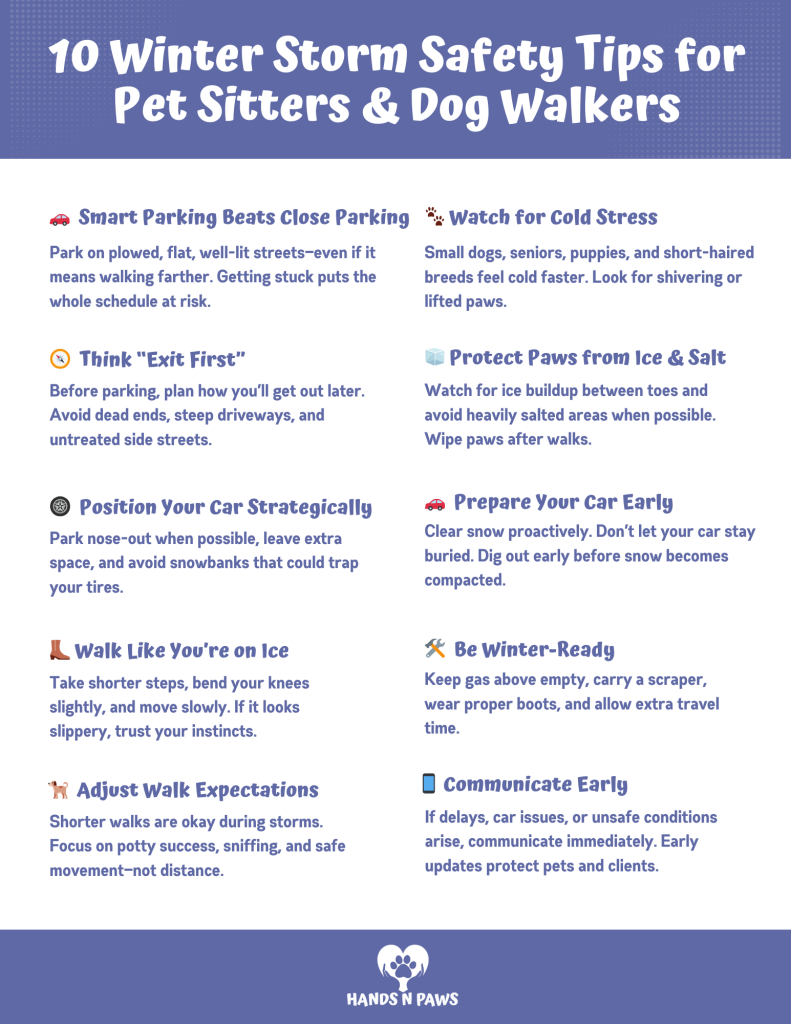
Below are the top 10 winter storm dog walking tips we follow at Hands N Paws, followed by expanded guidance to support safe, reliable care during crazy snow events.
Top 10 Winter Storm Dog Walking Tips
- Park safely, even if it means parking farther away
- Always think about how you’ll exit before you park
- Position your car to avoid getting trapped by snow
- Walk cautiously and assume surfaces are slippery
- Adjust walk length and expectations for pets
- Watch closely for cold stress or discomfort in dogs
- Protect paws from ice, salt, and snow buildup
- Keep your car storm-ready and don’t let it get buried
- Communicate early if your car is inoperable or conditions change
- Document adjustments clearly and loop in support when needed
These ten habits prevent injuries, missed visits, and avoidable stress — especially during active storms.
How to Apply These Winter Storm Tips in the Field
Smart Parking Beats Close Parking
During winter storms, parking closer to a home is not always the safest choice. In snow and ice, stability matters more than convenience.
It is completely acceptable to park farther away if it means your vehicle stays on a plowed, flat, and well-lit street. A short walk is always preferable to getting stuck, damaging your car, or creating delays that impact other visits.
Safer parking options may include:
- Main roads
- Churches or small plazas
- Assisted living facilities
- Schools, when appropriate
In winter conditions, a 2–5 minute walk is often the smartest and safest decision.
Think “Exit First,” Not “Arrival First”
Before you park, pause and plan ahead.
Ask yourself:
“How am I getting out of this spot later?”
Avoid parking in:
- Dead ends
- Steep or untreated driveways
- Snow-packed alleys
- Untouched side streets
If backing out later feels uncertain, choose a different location. Good judgment at arrival prevents problems at departure.
Position Your Car Strategically
How you park is just as important as where you park.
Whenever possible:
- Park nose-out so you can drive forward when leaving
- Leave extra space between vehicles
- Avoid areas where snowbanks may trap tires after plows return
Snow often hides curbs, ice, and uneven ground. Giving yourself room reduces risk and stress.
Walk Like You’re on Ice (Because You Are)
Winter walking requires a slower, more intentional approach.
- Take shorter steps
- Keep a slight bend in your knees
- Maintain a low center of gravity
- Use railings, fences, or walls when available
If a surface looks questionable, trust your instincts. Slowing down is a safety skill, not a weakness.
Adjust Walk Expectations for Pets
During the colder months, safety on winter walks matters more than mileage.
In extreme cold or deep snow:
- Shorter walks are appropriate
- Focus on potty success
- Allow sniffing for mental stimulation
- Prioritize stable movement over mileage
Backyard potty breaks are fully acceptable when conditions are rough. Flexibility keeps both pets and walkers safe.
For additional seasonal pet safety tips, Columbus Humane also shares helpful cold-weather guidance for pet owners.
Watch for Cold Stress in Dogs
Some pets are more sensitive to cold weather, including:
- Small dogs
- Short-haired breeds
- Senior pets
- Puppies
Signs of cold stress may include:
- Lifting paws
- Shivering
- Slower movement
- Attempting to turn back toward home
If you notice these signs, shorten the walk and return indoors.
Protect Paws From Ice and Salt
Snow, ice, and de-icing products can irritate paws quickly.
- Watch for ice buildup between toes
- Avoid heavily salted sidewalks when possible
- Check paws mid-walk if conditions are severe
Once indoors, wiping paws helps prevent irritation, slipping, and ingestion later.
Storm Preparedness Starts Before You Leave Home
Reliability begins before the visit.
If heavy snow is expected:
- Clear snow off your car proactively
- Avoid letting your vehicle sit buried
- Dig out early before snow becomes compacted
- Check tailpipes to prevent blockage
A car stuck at home affects the entire schedule, not just one visit.
Basic Winter Car Readiness
Before heading out during winter weather:
- Keep your gas tank above empty
- Carry a snow brush and ice scraper
- Wear proper winter footwear
- Plan for slower travel times
Prepared Columbus dog walkers and pet sitters are reliable ones.
Communicate Early and Clearly
Winter storms require proactive communication.
If:
- Your car becomes inoperable
- You anticipate delays
- Conditions feel unsafe
Communicate as early as possible. Do not wait until after a visit is missed or changed.
- Adjust the plan
- Document it clearly in your journal
- Loop in support when needed
Clear communication protects pets, clients, and the entire team.
Winter Storm Mindset: Responsibility Over Perfection
During winter storms, the goal for Columbus pet sitters is safe, consistent, dependable care.
That means:
- Planning ahead
- Adjusting expectations
- Communicating early
- Protecting your ability to continue showing up for all visits
At Hands N Paws, winter storms are not about perfection. They are about sound judgment, responsibility, and reliability — especially when clients are counting on us the most.